
ICSI
ICSI
What is ICSI?
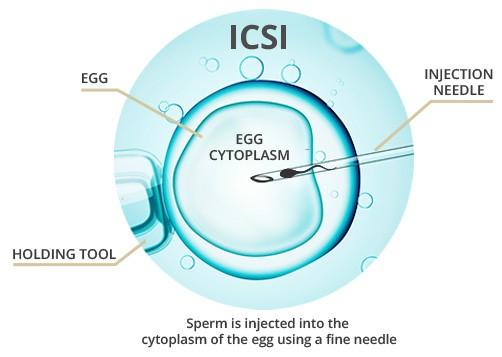
Intracytoplasmic Sperm Injection (ICSI) is a specialized form of In Vitro Fertilization (IVF) performed when a man’s sperm is unable to fertilize an egg. This procedure increases the chances of fertilization that eventually may lead to greater chances of pregnancy. These days ICSI is performed in nearly half of all IVF treatments.
It is done in patients where spermatozoa count is low and the sperm is not suitable for conventional IVF.
How is ICSI performed at Pragati IVF?
When a man’s sperm fertilizes a woman’s egg, the head of the sperm attaches to the outside of the egg to carry out the fertilization process. However, in certain cases, due to a variety of reasons, the sperm cannot penetrate the outer layer of the egg and is unable to fertilize it. In such cases, the doctors perform Intracytoplasmic sperm injection (ICSI) along with IVF to help fertilize the eggs.
The procedure for ICSI follows the standard IVF treatment apart from a few additional steps. The following steps are involved in ICSI-
Egg Stimulation - The doctor prescribes certain fertility-boosting drugs to the female to stimulate her ovaries to develop multiple mature eggs. Transvaginal ultrasound and blood tests are performed to examine the ovaries and hormonal levels in the body.
Retrieving the Sperm Sample - Male needs to produce a sperm sample. In the absence of sperm in the semen, the doctor will retrieve them surgically. Generally, the sperm is extracted from the epididymis or testicle through a needle under anaesthesia. You may also need to undergo a biopsy of testicular tissue to get enough sperm. Once the sperm is retrieved, it is frozen to be used when required.
Retrieving the Eggs - Eggs are removed from the female’s body (follicles) with the help of a small needle under ultrasound guidance. It is done under anaesthesia.
Fertilization - The doctor will isolate individual sperm and inject them into individual eggs (the cytoplasm of the eggs). Often, the following day most of the eggs are fertilized.
Embryo Culture and Transfer - Once the fertilized eggs start dividing and growing, they become embryos. Generally, two to three embryos are transferred into the female’s uterus through the cervix with the help of a thin catheter.
The doctor may freeze and preserve the extra embryos for future use.
Who can get ICSI?
ICSI is beneficial, particularly for male infertility conditions. It can overcome fertility problems like-
- Low sperm count - When the male produces too few sperm to perform IUI or standard IVF treatment.
- Low sperm mobility - When the sperm does not move in the normal fashion.
- Sperm attachment issues - When the sperm cannot attach its head or penetrate the cytoplasm of the egg.
- Blockage in male reproductive tract - It prevents the sperm from getting out and fertilizing the eggs.
- When eggs are not fertilizing even after repeated IVF cycles, regardless of the sperm’s condition.
Are there any complications?
Generally, an intracytoplasmic sperm injection procedure fertilizes 50 to 80% of eggs, depending upon quality of eggs and spermatozoa. However, a few issues that may arise during or after the procedure are-
- Eggs may get damaged.
- The eggs do not grow into an embryo even after getting injected with sperm.
- The growth of the embryo stops.
Benefits of ICSI
- Couples with male infertility, like low sperm count, decreased sperm mobility, or other infertility issues can have their genetic child.
- Sperm retrieved from a man’s testicles can be used to fertilize eggs in special cases like when a man has undergone vasectomy.
- It is useful in cases of unexplained infertility.